5 min read
Built to Last: 5 Lessons on Resilience from VMHC 2026
 Better Impact
Oct 21, 2026, 10:19:29 AM
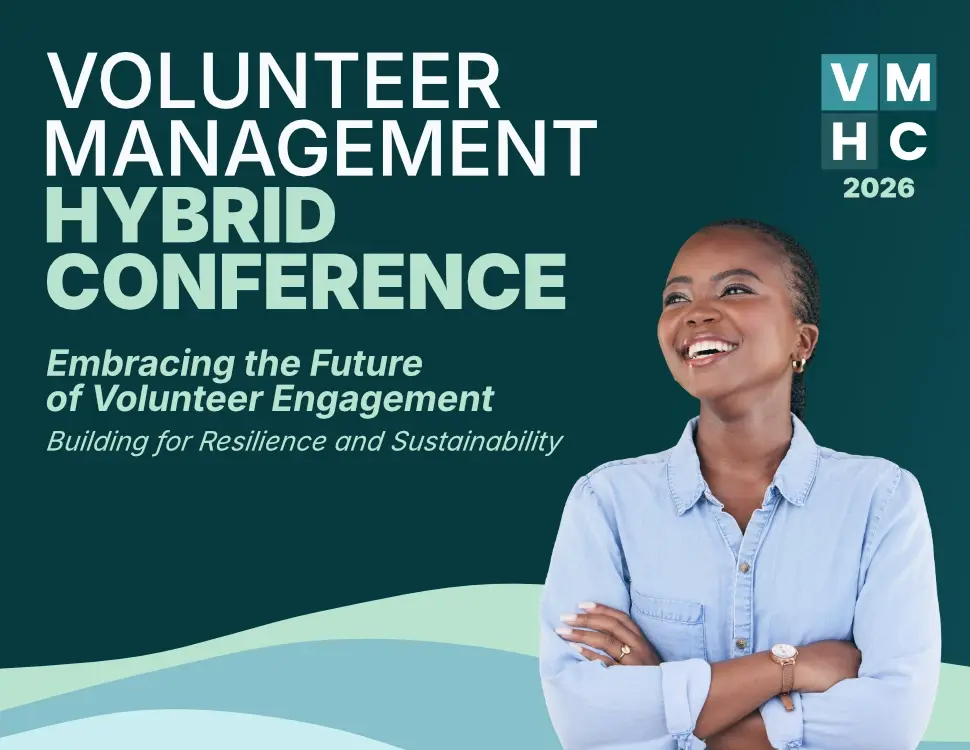
VMHC 2026 brought together more than 2,300 volunteer leaders from 45 states and 8 Canadian provinces. The clearest lesson of the day: the biggest risk to volunteer programs isn't a shortage of people, time, or money. It's programs built for a world that no longer exists.
Volunteer professionals are being asked to do more than ever. Leaders want clear outcomes. Communities expect flexibility. Technology is no longer optional, and resources are stretched thin.
The usual response is to push harder: recruit more, track more, and protect what has always worked. At the 11th Volunteer Management Hybrid Conference, presented by Better Impact in partnership with the Association of Leaders in Volunteer Engagement (AL!VE) and Volunteer Management Professionals of Canada (VMPC), our speakers made a different case. Resilience isn’t about absorbing more pressure. It’s a design choice.
This year's conference set new records. That growth reflects Better Impact's vision: volunteer professionals resourced, recognized, and respected in every community. Most of all, it reflects what this conference has always been about: showing up. Showing up for each other, for our volunteers, and for a profession that is ready for an honest conversation about what's working and what isn't.
VMHC 2026 by the numbers:
- 2,300+ registrants, including 525 virtual attendees
- 70+ host site locations
- 45 US states plus Washington, DC, 8 Canadian provinces, and attendees from the UK, Australia, and Singapore
- 120 registrants with an active CVA credential
- Top sectors: human services (29%), healthcare (15%), animal welfare (11%), and government (10%)
Better Impact CEO Houston Goodwin and President Tim Sarazen opened the day by defining resilience as how well we handle curveballs, and sustainability as whether a program keeps thriving after we pass the baton. They grounded both in two questions every volunteer leader should be able to answer: What is your strategy? And what is your reality?
Here are five ideas from the day that challenge how most of us answer them.
1. Familiarity is not stability
The conventional view says the programs that have always worked are the safe bet. In a changing landscape, standing still is still a decision, and often the riskiest one.
In Nostalgia Is Not a Strategy, Jessica Pang-Parks, CVA, argued that habits that feel safe can quietly stop serving the mission. Too often, volunteer engagement is treated as an afterthought rather than a strategy for building trust.
The leadership move is small and specific. Name one habit that no longer fits and make one concrete shift. That is the line between managing a program and leading one.
2. The threat to human connection isn’t AI. It’s admin.
The conventional view says AI will make volunteer engagement less personal. In The AI Toolkit, Veronica Torres Deally argued the opposite: in our sector, AI is here to give us our jobs back.
Most coordinators spend much of their week on spreadsheets, scheduling, and blank pages. That leaves a fraction of their energy for the people who make the mission possible. That ratio, not technology, is what wears down connection.
Veronica’s toolkit was deliberately practical; built around free tools a small team can start using this week:
- Chat assistants like ChatGPT, Gemini, or Claude for first drafts, tone changes, and translating a handbook into other languages
- Canva for design. She noted that registered nonprofits can get the premium Teams plan free for up to 10 users.
- Buffer for social media. One caption, rewritten for each platform, scheduled in a 30-minute “Monday morning ritual”
- Zeffy for fundraising and event ticketing with no platform or processing fees
Her Human-First Workflow treats AI like an eager intern. It drafts, you add the soul, and you use the time you saved to deliver the message personally.
The guardrails matter as much as the tools. AI should never speak for you, only to you. Keep volunteers’ personal information out of public AI tools and check every output for accuracy and bias. As Veronica put it, burnout is the enemy of impact.
Veronica's case study showed how it adds up. A fundraiser raises $2,130 for sensory care kits that cost $65 each. AI does the math (28 kits) and suggests how to frame the impact. Canva turns it into an infographic. The coordinator’s job shifts from wrestling with a spreadsheet to telling donors exactly what their gift made possible and thanking them personally.
3. More data won’t protect your budget. Better stories will.
The conventional view says that when leadership asks for proof, you should track more. In Making the Data Work for You, Michele Wiesner, MPA, CVA, asked a harder question: is the data you already collect working hard enough for you?
Hours logged describe activity, but illustrating impact takes a refreshed framework. Her framework (Audit, Align, Assemble, Articulate), takes the numbers you already have and turns them into a report tied to organizational goals. That is what earns a board’s attention and supports the next budget ask.
The closing remarks named the real gap. Most volunteer professionals are already doing the hard work. The opportunity is pairing the data with the story, so the impact already happening in our communities is seen.
4. Sustainability isn’t a recruiting problem
The conventional view says that when capacity runs short, you recruit. In Keeping the Heart Beating, Bec Treby, Volunteer Program Manager at Ronald McDonald House South East Queensland, called that a revolving door. If volunteers aren’t engaged, supported, recognized, and connected to purpose, new recruits simply replace the ones who leave.
She speaks from experience. Her program had more than 300 volunteers in 2018, all managed on paper. By 2021 it was down to 170. Rebuilding started with asking why people stayed and why they left, not who else to recruit. Her framework has four steps:
- Understand your reality. Learn why volunteers stay and why they leave and map their journey from start to finish.
- Align with strategy. Show leadership which outcomes volunteers make possible, so volunteering becomes everyone’s responsibility.
- Design intentionally. Revisit roles, remove friction, build in flexibility, and make recognition routine.
- Measure and improve. Keep clean data, act on feedback, and share impact back with volunteers.
Intentional design can be simple. Bec’s team holds a quarterly staff and volunteer celebration to recognize small wins. When a volunteer of more than 25 years could no longer serve in person, they created an honorary lifetime volunteer role so she could stay connected. Neither idea needed a new budget, just a willingness to rethink how things had always been done.
Her hardest-won lesson: growth without systems creates pressure. Passion alone won’t sustain our programs. We need strategy, good systems, and the courage to keep improving.
She also named two more lessons: leadership support makes a significant difference, and the volunteer experience matters as much as compliance. Then she offered five steps any program can start on right away:
- Run a quick volunteer program health check.
- Choose one sustainability metric to focus on.
- Review the volunteer journey from start to finish.
- Have a strategic conversation with leadership about how volunteers support the organization’s goals.
- Build a 90-day action plan.
Future-proofed programs aren’t built in one big initiative. They’re built through small, intentional improvements made consistently over time.
5. Wellbeing, DEI, and accessibility are load bearing
The conventional view says that when budgets tighten, wellbeing, DEI, and accessibility can wait. The day’s live panels, with Ashley Rieser, CVA, Shannon Maheu, and Kristen Loblaw, put those topics right next to sustainability, and the pairing is the point.
A program that burns out its leaders or shuts out parts of its community isn’t sustainable, however well it’s run. The same idea surfaced across the sessions. Veronica pointed out that AI can translate a handbook into five languages and open doors to communities a coordinator couldn’t reach alone. Bec described designing roles around volunteers’ lives, not the other way around. Inclusion isn’t separate from resilience. It’s how resilience is built.
What this means for 2027
The closing remarks distilled the day into three pillars: strategy that meets the moment, technology with a human connection, and data that unlocks resources. None of them requires a bigger budget. Each requires a deliberate choice.
That is why the challenge from the opening address is worth taking seriously:
- Set a reminder for three and six months from now and share one thing that changed in your program.
- Find an accountability partner from your host site or the virtual room.
- Post what you learned with #VMHC2026, so the next person entering the profession doesn’t have to start in a void.
A rising tide lifts all ships. Keep learning with these resources:
- Watch the recordings of all four feature sessions on the VMHC 2026 Recordings page.
- Download the VMHC 2026 Handbook for speaker resources, including Bec’s future-proofing scorecard and Veronica’s AI Toolkit.
- Request your PDU certificate for the sessions you attended.
Thank you for showing up
To every attendee, host site, speaker, panelist, presenter, and partner who made VMHC 2026 happen, and to everyone who kept the conversation going online: thank you. It takes a village, and we’re grateful you’re ours.
Mark your calendar: VMHC 2027 is October 20, 2027. Invite a colleague, and we’ll see you there.
Featured Posts
- Mastering Volunteer Management: The Ultimate Nonprofit Guide
- 18 Best Volunteer Management Software Tools for Nonprofits
- Nonprofit Volunteer Recruitment: Overview + Top Strategies
- Volunteer Training: How to Set Volunteers up for Success
- Volunteer Appreciation: Getting Started + 10 Top Ideas