



Exiting Volunteers The Right Way
Volunteering New Zealand is the New Zealand peak body for volunteers and volunteering. With a wide-ranging membership of national organisations, it...

6 min read
Jonathan Taylor
Oct 21, 2026, 1:41:51 PM
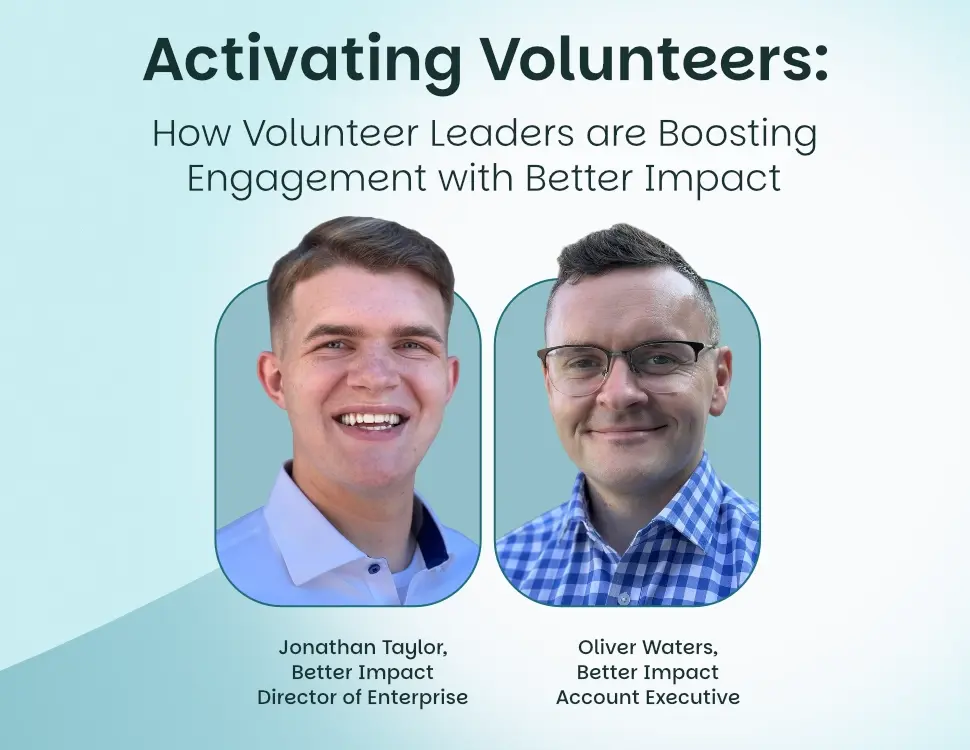
You've done the hard part: someone is interested in volunteering with you. Now the sign-up process, the reminders, and the back-and-forth emails all run through you. In this session, Jonathan Taylor and Oliver Waters of Better Impact share how self-scheduling, automation, and better volunteer data can help you activate volunteers, take the logistics off your plate, and spend more time with the people who make your mission possible.
Recorded live on Thursday, October 15, 2026. Running time: about 30 minutes, including audience Q&A.
In this post
Volunteers are getting harder to reach, and if you lead a volunteer program, the challenges Jonathan opens with will probably sound familiar:
You end up scheduling, sending reminders, and keeping track of every opportunity yourself, then explaining it all again to each new person. As Jonathan puts it, "All of this has to live in one person's brain. Probably you."
He describes volunteer coordinators as stuck in the mud of manual communication, with little time left to empower and connect with volunteers. The way out is to move the logistics into one central place, so volunteers can handle the administrative steps themselves and you can get back to the people.
Oliver spends every day talking with volunteer leaders about their volunteer journey and how technology can support it. His first piece of advice applies to every program: think about everywhere you currently recruit, advertise, and promote volunteering. Getting people interested is honestly the hard part, so when they are, don't make them hunt for the next step.
Whether someone clicks a link on your website or scans a QR code in your newsletter, it should bring them to one central volunteer site that matches your organization's branding, website, and social media. Then show them what you need. A clear opportunity listing with the tasks involved, photos from past shifts, available dates and times, open spots, and whether it suits groups or individuals takes away much of the anxiety a new volunteer feels about what a role will include.
Not every role has to be public. Some opportunities can be open for anyone to click through and sign up, while others stay hidden until a volunteer has completed steps like a background check.
Volunteers should be able to filter opportunities by what fits them, whether that's their interests, their family, or a group they want to bring along, and sign up in seconds.
Think about the last time you booked a flight or made a dinner reservation. Nobody had to manually confirm it for you. Oliver's point is that volunteering should work the same way: "Let the technology handle the automation." That means the confirmation when someone signs up, the reminder before their shift, and the thank-you afterward. Volunteer self-scheduling takes those tasks off your list without taking away from the experience.
Your onboarding journey should be yours. For some organizations, that's a name, an email address, and an electronic signature before picking a shift. For others, it's background checks, trainings, and videos to complete first.
Either way, preparation is what brings volunteers back. Jonathan describes the difference between a volunteer who shows up at the door unsure what to expect and one who has watched a video in advance, understands the process, and knows exactly where to check in. The second volunteer has a seamless experience from start to finish, and volunteers who are in the know are far more likely to volunteer again.
Oliver adds that anything you want volunteers to have ongoing access to, like FAQs, volunteer handbooks, training libraries, and videos, should live on resource pages in one volunteer portal instead of a patchwork of systems.
"If it's hard to volunteer with you, some people are going to drop out… doesn't matter how committed they are to your mission."
Oliver Waters, Better Impact
Oliver asks organizations the same question every day, and he had already asked it twice the morning of the session: what do you want to know about the people who volunteer with you? Contact information and skills are a start. Details like where volunteers work, the school they went to, or the faith community they belong to help you build real connections, because the more you know about someone, the more you can build a relationship with them.
Employer data can uncover corporate support. Say 50 people volunteered with you last month and they all work for the same company. That's a conversation worth having with that company. If you aren't tracking employers, you might be missing key corporate dollars.
Source data can fix recruitment gaps. Oliver shares the story of a mentoring organization with plenty of female volunteers that struggled to find male mentors. The question that helped was simple: how did you find the male mentors you already have? Once you know where volunteers come from, you can do more of what works, whether that's another recruitment fair, another university event, or another social media post.
Profiles make recognition easier. Activity updates and milestone badges for a first shift or first 10 hours turn volunteering into a more connected experience. As Jonathan says, when volunteers feel connected to your organization, they want to engage with it.
Leading volunteers is an enormous job. You're engaging every person who comes to volunteer and managing those relationships, while also handling scheduling, tracking, reporting, and communication. Without a dedicated volunteer management system, Oliver says, you're running up an escalator that's probably going the wrong way a lot of the time.
A purpose-built system brings that work into one place instead of four or five. Skills, interests, availability, awards, milestones, waivers, and background checks all live in one profile. Built-in reports answer everyday questions like how many hours were logged, how many volunteers you onboarded this month, and who your top volunteer was this week. You can also build reports around the data points you need for grant applications and board meetings. Communication runs through the same system too, with email and, depending on your version of Better Impact, text messaging.
When you activate volunteers this way, participation goes up, and you and your staff can focus on strategy instead of coordination. Volunteers who feel confident in their shifts can even help others who are less tech-savvy. And it matters beyond your volunteer program. Jonathan points out that 79% of regular volunteers also contribute financially to the organizations they volunteer with.
One attendee describes a challenge many volunteer leaders know well. They have a long list of people who asked for information, but half haven't completed onboarding. Others finish training but never sign up for a shift, or come once or twice and don't return, and a feedback survey isn't getting many responses.
Oliver's answer comes back to communication. Make sure volunteers know where they are in the journey and whether you're waiting on them to complete something. Use statuses and tags to track each volunteer's progress, and automate communication so they aren't left waiting on you. Most importantly, explain the full journey up front, from "I'm interested" to arriving for a first shift. When people don't know what the process looks like, it creates tension and anxiety that can keep them from getting involved.
All Better Impact systems let you email volunteers, and depending on your version, you should be able to text them too, so all your communication runs through one place. If you're an existing customer, reach out to the Better Impact support team to learn about turning on text messaging.
Better Impact offers a range of products, and they differ in look and feel. If the more public-facing view from the session interests you, our team can talk through what a transition could look like, if it's the right fit for your program.
Wherever your program is today, there's a next step that fits:

As Better Impact's Director of Enterprise Sales, Jonathan works with the organization's largest clients, including hospitals, multi-chapter nonprofits, and state and local governments, to build volunteer programs that scale. His path into this space started long before his career: Jonathan met his wife while volunteering together in Haiti, and nonprofit work has stayed central to his life ever since, from local greenway conservation to hands-on volunteering across Charlotte. That personal stake shows up in how he approaches every client conversation, with a genuine belief that the systems behind volunteerism matter as much as the mission itself.

Oliver Waters is one of BI's most senior product advisors and has almost a decade of experience helping thousands of organizations evaluate and implement volunteer management software. Through his role at Better Impact, and previously Galaxy Digital, Ollie works with volunteer leaders across the nonprofit, healthcare, education, government, and volunteer center sectors to build more effective and streamlined volunteer programs through purpose-built technology.
Book a live demo with our team to talk through how to simplify volunteer sign-up and find the right product for your program and budget.
Book a DemoFeatured Posts
Volunteering New Zealand is the New Zealand peak body for volunteers and volunteering. With a wide-ranging membership of national organisations, it...
We talk a lot about burnout in the nonprofit sector, and burnout is especially common among volunteer engagement professionals. According to a 2017...
Most people don't set out to become volunteer leaders. They inherit a spreadsheet, a binder, and a long list of responsibilities, then figure it out...