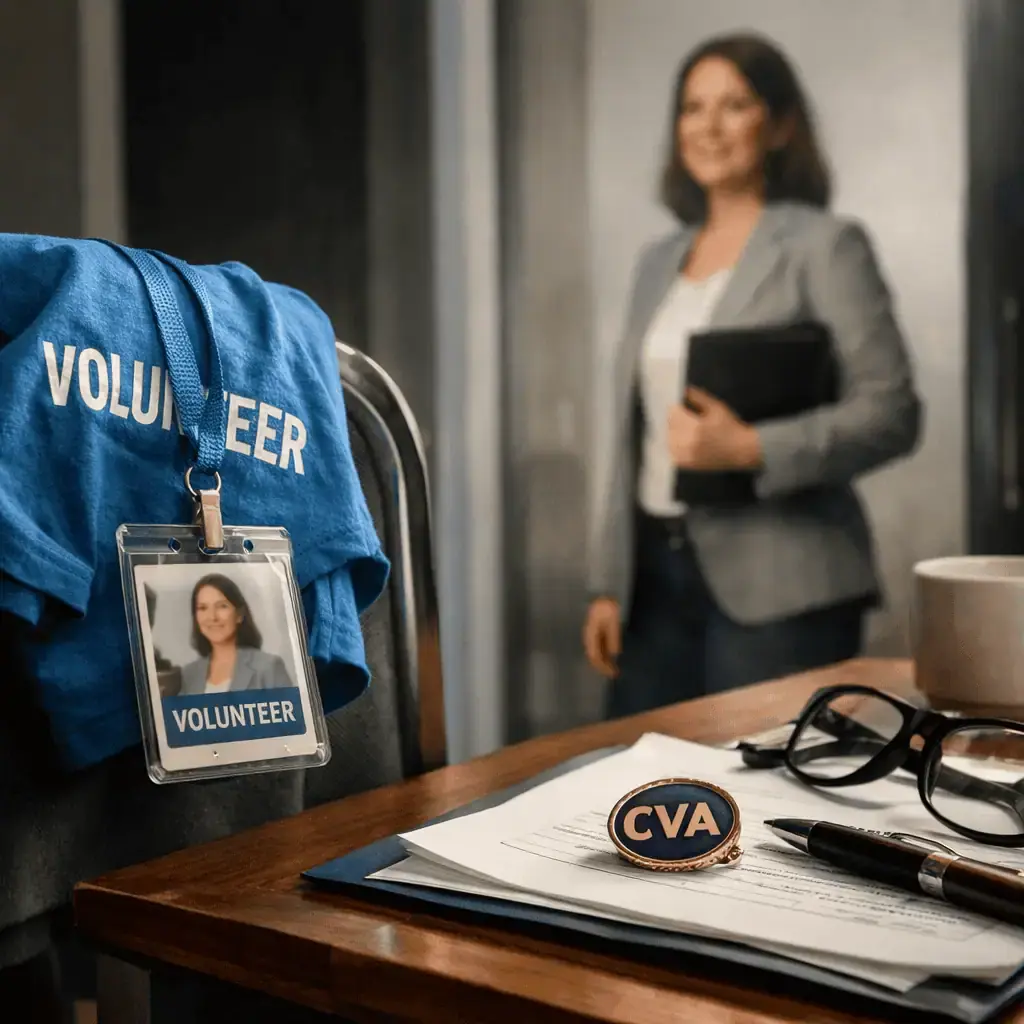
How to Build a Career in Volunteer Administration: From Volunteer to CVA
Table of Contents Where It All Started: A Twelve-Year-Old's Vision Stepping Into Volunteer Administration A New Chapter: Richmond Cares, Richmond...

8 min read
Karin Henderson
Oct 5, 2026, 1:01:07 PM
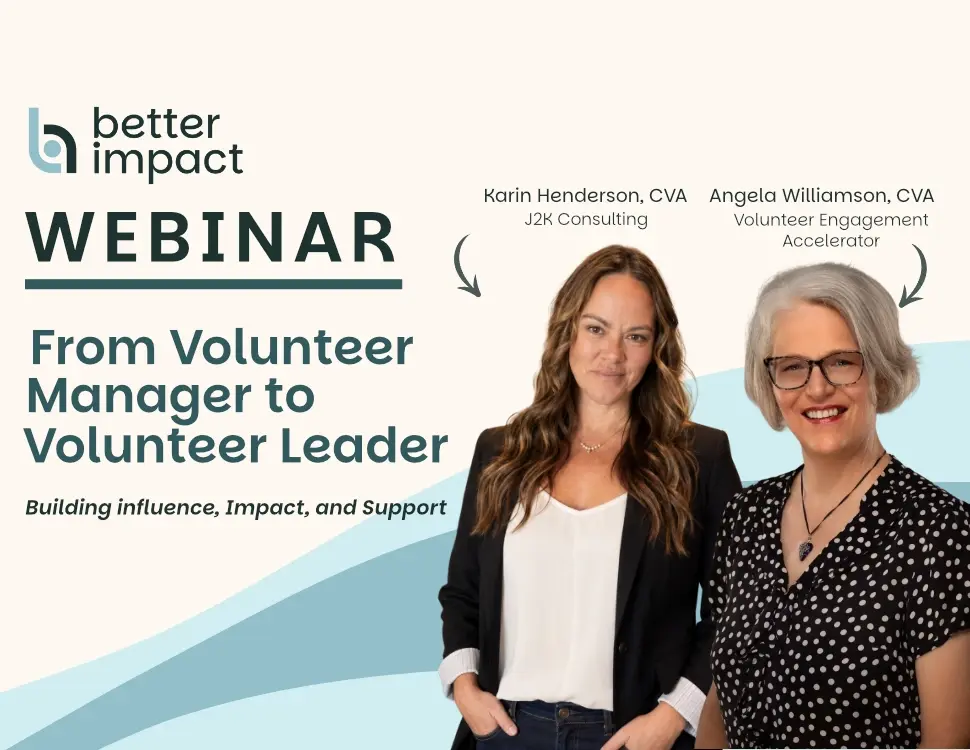
Most people don't set out to become volunteer leaders. They inherit a spreadsheet, a binder, and a long list of responsibilities, then figure it out as they go. In this session, Karin Henderson, CVA and Angela Williamson, CVA shared the building blocks that help volunteer leaders move from managing tasks to leading volunteer engagement, plus a simple one-hour exercise for planning 2027.
Recorded live on Thursday, October 1, 2026. Running time: about 55 minutes, including audience Q&A. This session is part of a multi-part series. Missed the first one? Catch up on Session 1: Beyond Orientation: Retaining Volunteers Through Recognition, Connection & Culture.
Webinar feedback
Your feedback helps us improve future webinars and create more useful sessions for volunteer engagement professionals.
PDU credit
Complete the form to receive your Certificate of Completion, which can be used towards earning Professional Development Units (PDUs).
Session materials
Access the slides from this session, plus the guides we shared during the live chat.
Session Slides
PDF · Presentation slides · Karin Henderson & Angela Williamson
Live Chat Transcript
TXT · Recording chat from the session
Volunteer Management Software Buyer's Guide 2026
Guide · Better Impact
Karin opened with the truth that no one tells you: volunteer management is a profession, just like fundraising or finance. Volunteer leaders are often responsible for recruiting, training, scheduling, supporting, retaining, recognizing, tracking, communicating, budgeting, planning events, and making the program accessible, usually without formal training for any of it.
That's why a volunteer program should have its own budget and funding, and should be included in your organization's strategic plan and priorities. If either is missing, it's worth a conversation. For those looking to grow professionally, Karin pointed to the Certified in Volunteer Administration (CVA) credential, which you can learn more about at cvacert.org.
Before anything else, every volunteer program needs four foundational pieces. These create the infrastructure for everything that follows.
1. Clear volunteer roles. At minimum, a role description should cover the purpose of the role, the specific tasks involved, the expected outcomes, and who the volunteer reports to.
2. Policies and procedures. Establish screening, confidentiality agreements, safety protocols, boundaries, a grievance process, and your approach to recognition early. Your volunteer policies should mirror the expectations you already have for staff, so you don't have to reinvent the wheel.
3. Forms and templates. The essentials include a volunteer application or intake form, an interview guide, an orientation checklist with mutual sign-off, an hours tracking log, an evaluation form, and an incident report. Many organizations share templates online, so start with what others have created and adapt it.
4. Volunteer records. For each volunteer, keep up-to-date contact information, availability, the roles they're trained for, skills and interests, completed trainings, required certifications or background checks, emergency contacts, and any recognition they've received. These records matter today and for whoever succeeds you in the role.
Whether you've built your program from scratch or inherited one, the hardest advice is also the most important: observe and learn first. Meet the volunteers, notice what's working, and look for bottlenecks and gaps. Write down every idea for changing everything, but don't act on it yet.
Next, organize and stabilize. Learn the systems you already have before adding new ones. Karin shared that she used Better Impact for three years only for scheduling before discovering the reporting tools and automations that made her work much easier. Spreadsheets are fine as a starting point, as long as you keep good records. Fancy software doesn't need to be step one.
Then plan and prioritize, looking ahead to the next quarter or six months rather than tomorrow. Along the way, set a communication rhythm, make sure technology saves time instead of creating more work, and clarify your own role with your supervisor. A few good questions to ask: Who supervises volunteers day to day? What decisions can I make, and what needs approval? What does success look like?
We often say we need more volunteers. But every new volunteer needs communication, training, scheduling, supervision, and support. If your systems aren't ready, adding ten volunteers doesn't give you ten volunteers' worth of capacity. Sometimes it just gives you ten more people to manage.
The mindset shift Karin wanted attendees to leave with: volunteers can create capacity. What if one of the roles you're recruiting for is helping with onboarding? Volunteers can interview applicants, train new volunteers, manage schedules, update records, and make follow-up calls, as long as their roles are clear about what they're accomplishing, what they're responsible for, what success looks like, and who supports them.
Ask yourself: what's one thing you're doing now that a well-supported volunteer could eventually do?
Succession planning shouldn't start when someone announces they're leaving, and it isn't only for executive directors. Think about the person who knows how everything works in a key program, or the only one who can find their way around a mysterious spreadsheet. If they disappeared tomorrow, what knowledge would go with them? Building your bench means identifying people with leadership potential, inviting them into progressively larger responsibilities, documenting what only you currently know, and creating shadow roles before you need them.
Capacity also has to be sustainable. Karin described "Helpful Hannah," the volunteer who says yes to everything until she starts wondering why she isn't being paid. Realistic workloads, boundaries, meaningful roles, appreciation, and permission to change roles or step away all protect your volunteers, and you. A successful volunteer experience can include taking a break or leaving well. If your system needs heroes to keep running, it isn't sustainable.
Recognition isn't a nice-to-have at the end of volunteer management. It's part of your capacity strategy, because people who know their contribution mattered are more likely to stay connected, take ownership, and tell others about your organization.

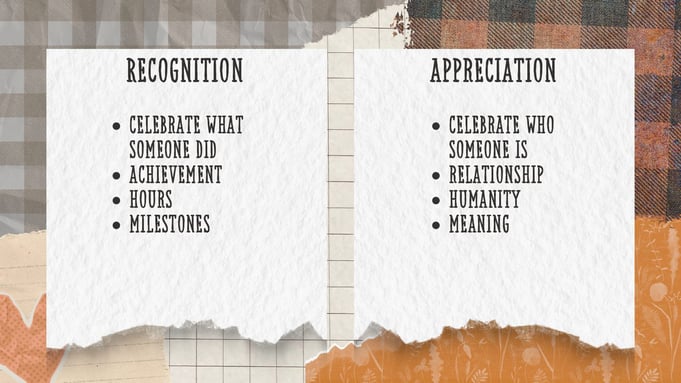
Recognition celebrates what someone did. Appreciation celebrates who someone is.
Recognition celebrates what people do: reaching 100 hours, leading an event, mentoring new volunteers. Appreciation celebrates who people are: their kindness, their calm energy, the way they make new volunteers feel welcome. The best programs do both, and the more specific the thanks, the further it goes.
If all of this feels like more work, that's not the goal. Instead, audit your capacity with three questions:
Then pick one. Capacity isn't built by adding another giant project. It's built by intentionally removing, sharing, and redesigning work.
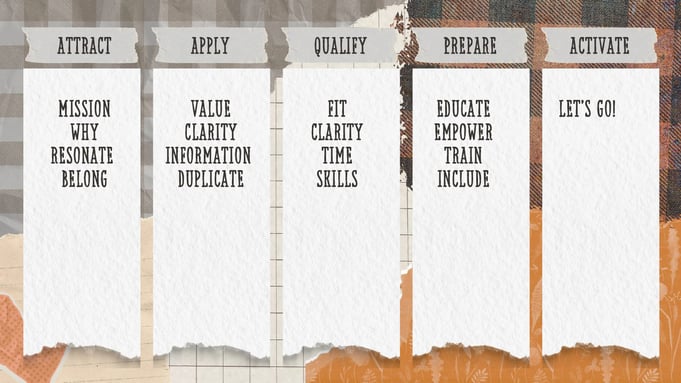
Breaking onboarding into five stages makes it easier to see where people get stuck.

The five stages of volunteer onboarding.
One of the biggest gaps is what happens between application and activation. It can take weeks or months, often with no communication at all. Karin shared her own experience applying to volunteer at a major sporting event in her city and, more than a month out, still not hearing anything about onboarding. She felt like she had disappeared into a system.
Simple touchpoints change that experience: welcome emails, next steps, timeline updates on things like background checks, and invitations to events. Retention can start before a volunteer walks through the door, and current volunteers can help keep new applicants engaged.
Angela picked up the second half of the session with advice on evaluating online systems. Before you start shopping, make your list: what you need, what you want, and your current pain points. Pay attention to what takes up most of your time and what your volunteers wish were easier.
Plan for growth, but buy for your reality. As Angela put it, don't buy a semi truck engine if you only need a midsize sedan. Think about what goes into the system and what you want it to do: intake and applications, mobile access, certification and training tracking, communication, document uploads, e-learning, scheduling, hours, and connection to your website. Look for automation that handles the non-human tasks so you have more time for the human ones, and for ways volunteers can take on parts of the work with the right guardrails.
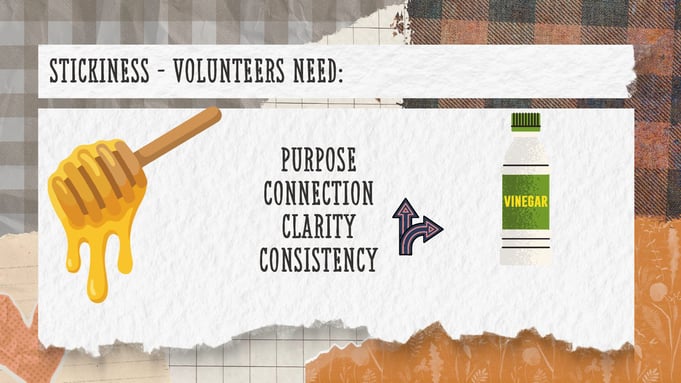
Not bad sticky, but honey sticky. Volunteers stay where they feel connected, valued, and can see their impact. If they don't, the experience turns to vinegar, and they won't come back. That stickiness starts long before an application is filled out.

Volunteers stay where they feel connected, valued, and see their impact.
Angela highlighted four ingredients:
With three months left in the year, Angela closed with a quick planning exercise. Block one hour on your calendar, and if accountability helps, book it with someone else.
Revisit your plan every week or two, and don't get discouraged if something doesn't happen on schedule. You can't implement every webinar at once, and that doesn't make you a failure. Every small step, including making the list, brings more clarity.
Stay connected. Invite applicants to special events, encourage them to follow and engage with you on social media, and consider pairing them with a current volunteer as a buddy so they have a real person to connect with, not just a newsletter.
Create an impact report that goes beyond numbers: what wouldn't happen without volunteers, how much time they save staff, and how they improve the experience of the people you serve. Where possible, include working with volunteers in staff role descriptions. If that isn't an option, ask for a few minutes in new hire orientation to explain how volunteers help staff do their jobs.
Automate where you can. If your software can automatically log hours for scheduled shifts, turn that on. Explain why hours matter for grants and funding, and include hour logging in your onboarding agreement so you can follow up with support rather than pressure.
Karin Henderson, CVA, is an experienced volunteer engagement professional with a focus on practical tools and realistic strategies for those new to the field. As a Certified in Volunteer Administration (CVA), she brings both professional standards and real-world insights to help emerging volunteer managers feel more confident and capable in their roles.
Angela Williamson, CVA, is a volunteer engagement consultant with 19+ years of experience helping nonprofits build people-centered systems that attract, train, and retain volunteers.
Connect with Angela on LinkedIn or visit angelawilliamsoncva.com
On Tuesday, October 20, 2026, connect live with volunteer leaders from around the world, online or at a host site near you.
Learn about VMHCFeatured Posts
Table of Contents Where It All Started: A Twelve-Year-Old's Vision Stepping Into Volunteer Administration A New Chapter: Richmond Cares, Richmond...
I didn't plan to become a volunteer leader. Like many others, it started with a raised hand at a parent meeting for my son's minor sports team....
Volunteering New Zealand is the New Zealand peak body for volunteers and volunteering. With a wide-ranging membership of national organisations, it...